An antenna tells you what is wrong with it long before it fails. Arcturn is built on years
of operating, maintaining, installing and engineering satellite ground systems, and on
reading what those systems were already saying. That shapes the work: analysis that
matches how stations actually behave, tools built around the job in front of the
operator, and training aimed at the service life of the equipment.
The work is the same whether the station is defense or commercial.
Work that leaves a customer more capable of understanding and sustaining their own systems.
01
Software tools
Tools built to a stated need, for the cases general-purpose software handles badly. The
point is to widen what an operator can see in their own system, and to leave that
understanding in house. Browser-based where the data is sensitive, so records are
parsed locally.
02
Operator and maintainer training
Instruction for the people who run, maintain and install ground-segment equipment, written
by someone who understands what it takes to operate and maintain ground systems
effectively, with the goal of extending the service life of the system.
03
Systems engineering and analysis
Consulting systems engineering and ground-system analysis for problems in the RF chain.
Turning the telemetry a station already produces into evidence: drive degradation,
tracking-error signatures, signal margin, and faults that resist a straightforward reading.
Work
Current work
Software built and maintained directly, and analysis done to find out whether something holds.
Ground-segment analytics
Sentinel Pass Analyzer
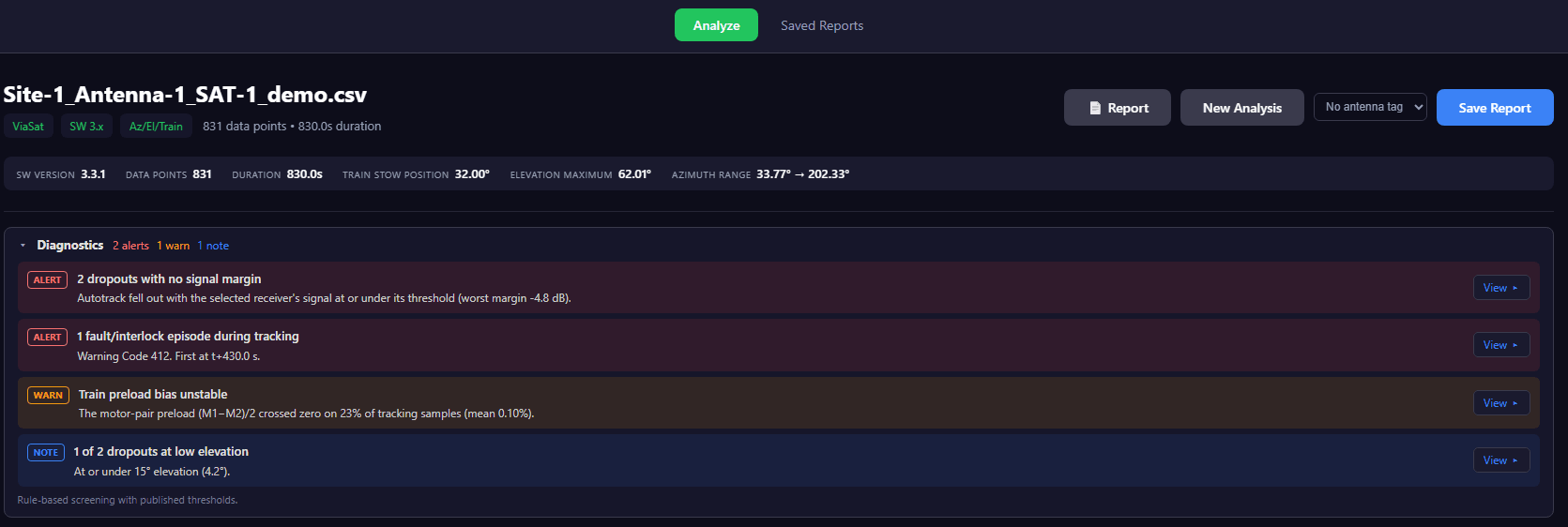
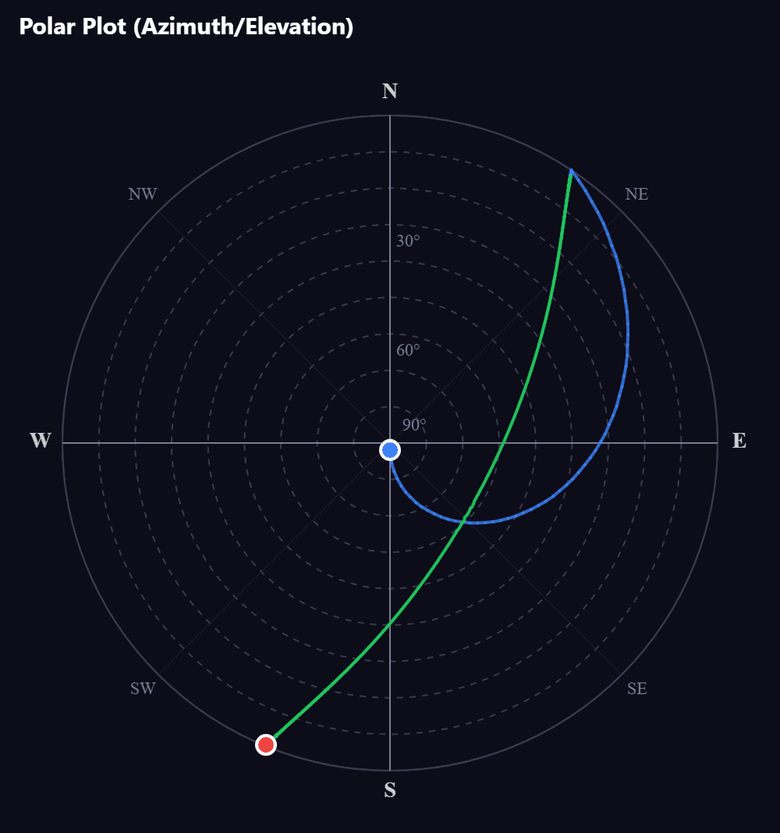
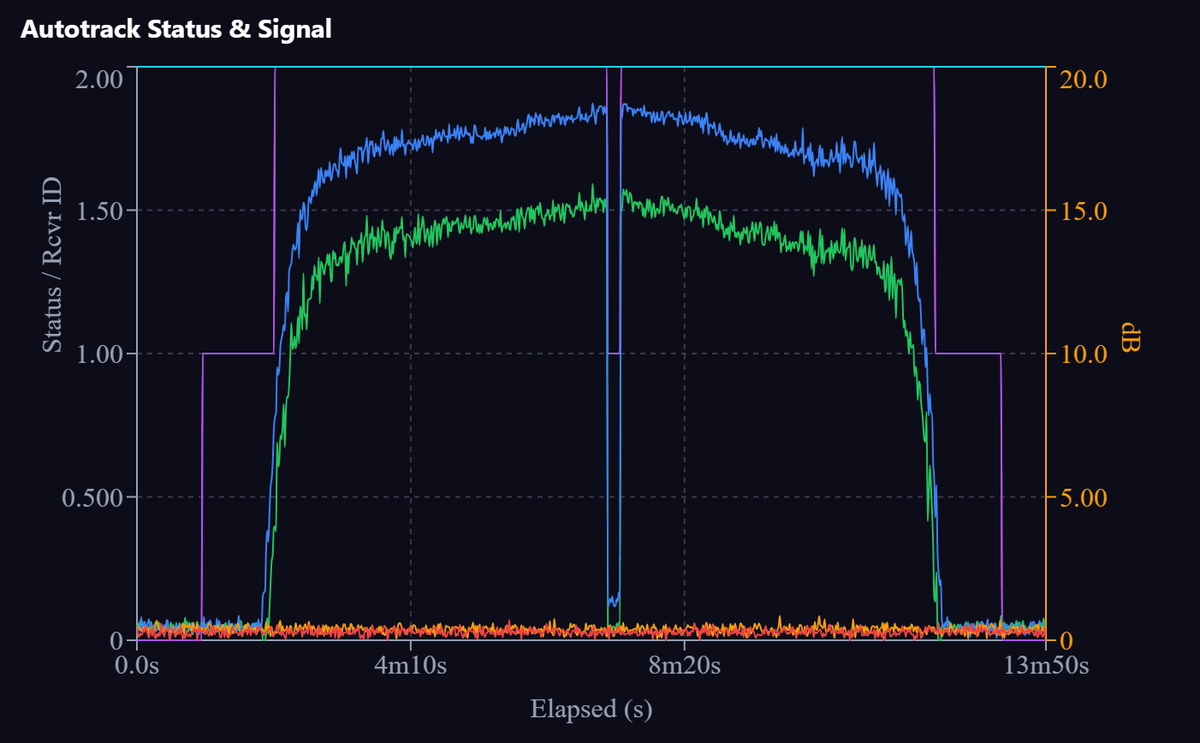
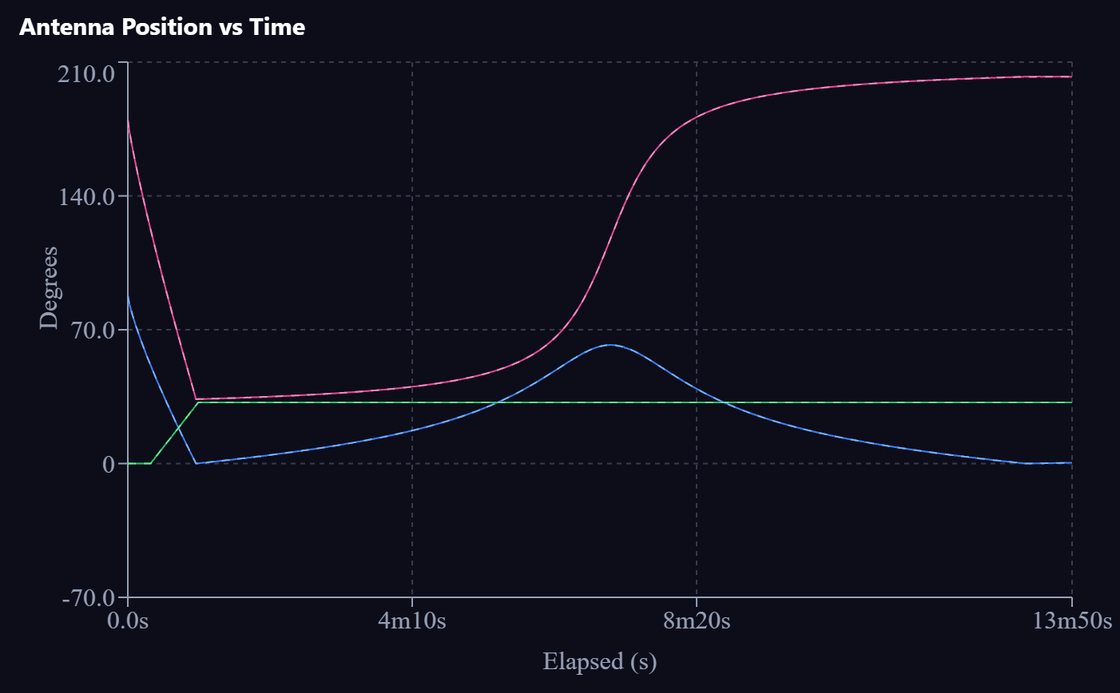
A browser-based analyzer for satellite-antenna pass reports. Analysis runs entirely in the
browser: a pass is never uploaded in order to be read. It reads the records an antenna
control unit already writes and returns servo and signal analysis, fault and interlock
timelines, dropout forensics, and diagnostics that state the measured condition and the
values behind it rather than only flagging that something looks unusual.
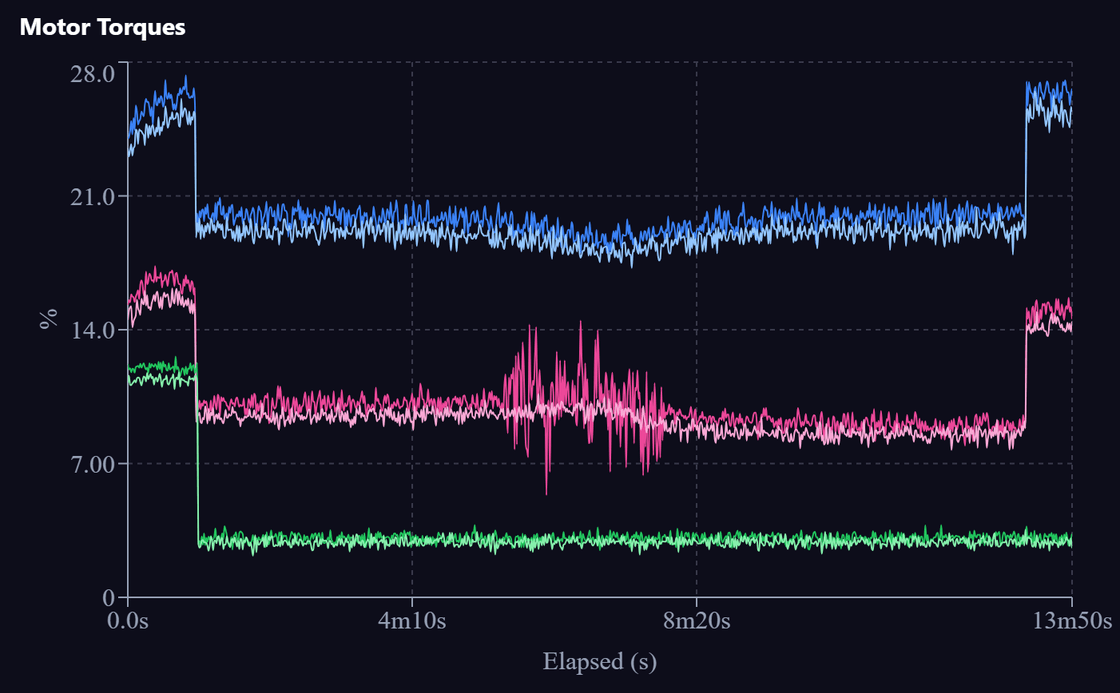
Batch analysis aggregates hundreds of passes into sky-coverage heatmaps, torque profiles
and trend series, so a slow mechanical drift becomes visible long before it becomes a
failure.
The analyzer follows a modular open systems approach: a vendor-neutral core behind
format-specific adapters. Record formats sit behind a common interface rather than inside
the core, so bringing an unfamiliar system in means writing an adapter against one example
pass, not a rewrite. Four adapters exist today, covering three generations of one vendor's
antenna control software plus its station control computer.
Saving a report or attaching a pass to a support message does upload a copy, and prompts
you to redact identifying fields before it leaves the browser. Both are deliberate
actions, never a precondition of analysis.
Real analyzer output · synthetic pass, not an operational record
A notional design study for assured timing and ranging from low Earth orbit, carried
out to find out whether the architecture closes. Unclassified, self-funded, and not a
product. It is on this page because of how it was done, not what it proposes.
The design closes by analysis across twenty-seven analyses, each tied to a requirement
through a verification traceability matrix. An adversarial red team was run against it
and every finding was answered by a dedicated closing analysis, including the ones that
hurt: orbit determination without ground contact, unit cost against a bottom-up
re-baseline, and spectrum rights. Load-bearing assumptions are derived and stated as
conditional. Every quantitative figure in the set regenerates from source with built-in
self-checks, so a reviewer can rerun them.
External facts were checked against primary sources during audit. The study treats the
existing commercial and government work in this area as prior art and cites it as such.
It claims no lead over anyone.
Systems engineeringRequirements traceabilityAdversarial reviewReproducible analysis
Instruction for the people who keep a station on the air, aimed at the service life of the
equipment rather than the length of the course.
Operations
Running passes with an understanding of what the antenna is actually doing. Track modes
and when each one is appropriate, acquisition and handover, reading signal behaviour as it
happens, and telling a genuine equipment fault from weather, geometry or a bad ephemeris.
Maintenance
Keeping drives, encoders and the RF chain healthy, and catching degradation while it is
still a maintenance item rather than an outage. Inspection routine, what wear looks like
in telemetry before it is audible, fault and interlock interpretation, and the difference
between a symptom and a cause.
Installation and commissioning
Taking a system from delivered to trusted. Siting and alignment, cable and waveguide
practice, pointing and boresight verification, and commissioning measurements that
establish the baseline every later comparison depends on.
Course material is written against the customer's own equipment, and where it helps, their own
pass records, so the examples are systems the room already recognises. On site or remote.
Scoped to the crew in front of you.
Engagement
How work starts
Small enough that the first conversation is with the person who will do the work.
01
A conversation
Describe the problem. Often one call is enough to establish whether it is worth engaging
on at all, and saying so plainly is more useful than a proposal for work that will not
help.
02
A scoped piece of work
An agreed deliverable with a defined boundary: an analysis of a specific problem, a tool
built to a stated need, or training for a named group. Scope set before the work starts,
not discovered during it.
03
Something you keep
The output is yours: the findings, the tool, the course material, and the understanding
behind them. The measure of a good engagement is that it leaves less need for the next
one.
About
The firm
Arcturn Defense Solutions is a North Carolina limited liability company. It exists to
solve problems faced by ground antenna stations, defense and commercial alike. The
name reflects where the founder learned the work, not the limit of who the work is for.
He has worked the ground segment as an operator, a maintainer, an installer and an
engineer. Every tool and every course here comes out of that. It is built by someone
who has sat in the same chairs as the people who will use it.
Arcturn is small and veteran operated, and intends to stay small enough that you deal
directly with the person doing the work. No account manager. No handoff.